Novartis will pay $2 billion up front to acquire a drug that could improve upon existing treatments for patients with a particular form of breast cancer.
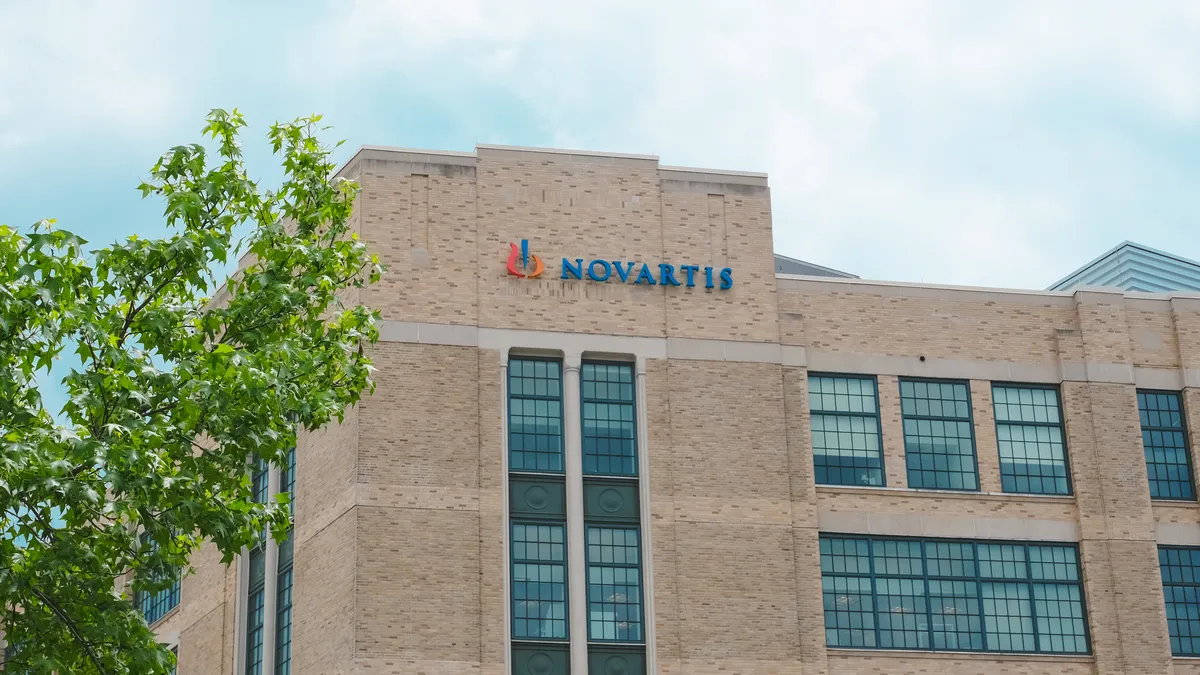
Through a deal announced Friday, Novartis will purchase Pikavation Therapeutics, a subsidiary of privately held, Delaware-based Synnovation Therapeutics. The buyout hands Novartis an experimental pill called SNV4818, which targets tumors driven to growth by mutations to the PIK3CA gene. Alterations to this gene are implicated in a wide variety of cancers, including an estimated 40% of patients whose breast tumors are hormone-receptor positive, but don’t express the protein HER2, according to Novartis.
Novartis already has an approved drug called Piqray that targets these mutations by aiming at an enzyme called PI3Kα. Other, similar medicines are approved as well, among them Roche’s Itovebi. But they’re associated with certain side effects, like hyperglycemia, skin rashes and gastrointestinal issues, that can make them tough to take.
Next-generation versions, like the one Novartis is acquiring, are designed to sidestep those issues by being more selective. According to Synnovation, SNV4818 is supposed to selectively target “mutant” forms of PI3Ka while avoiding the normal, or “wild-type” version. That distinction should reduce unwanted side effects, enable more “consistent dosing,” and enable SNV4818 to be used alongside other treatments as well as in earlier lines of care, Novartis said in a statement.
“While mutated PI3Kα is a well‑established driver in HR+/HER2‑ breast cancer, there remains a challenge in achieving effective pathway inhibition with a tolerable therapeutic profile,” said Shreeram Aradhye, Novartis’ head of development, in the statement. Synnovation’s approach could lead to “improved tolerability and [a] more durable benefit for patients,” he added.
The drug is currently in early-stage testing in breast cancer and other solid tumors. The study has a primary completion date in 2027, according to a federal database.
Last year, Eli Lilly scooped up a similar medicine originally developed by Scorpion Therapeutics. That drug, dubbed STX-478, is also in early testing. Relay Therapeutics and BridgeBio Oncology Therapeutics have medicines that act on PI3Kα as well.
Novartis has turned to dealmaking in recent years to pad its oncology portfolio. In 2024, the Swiss pharma paid $1 billion for radiopharmaceutical developer Mariana Oncology. That year it gained a blood cancer drug in a $2.9 billion acquisition of MorphoSys, too.
In addition to the upfront payout, the Pikavation acquisition includes up to $1 billion in future milestone payments. The startup has other PI3Kα-targeting medicines in its portfolio, Novartis said.