5 FDA decisions to watch in the second quarter of 2026
The next three months will bring more tests of regulatory flexibility, as well as decisions on closely watched medicines for obesity, Alzheimer’s and cardiovascular disease.
Published Jan. 7, 2026
•
Updated March 30, 2026
By BioPharma Dive staff
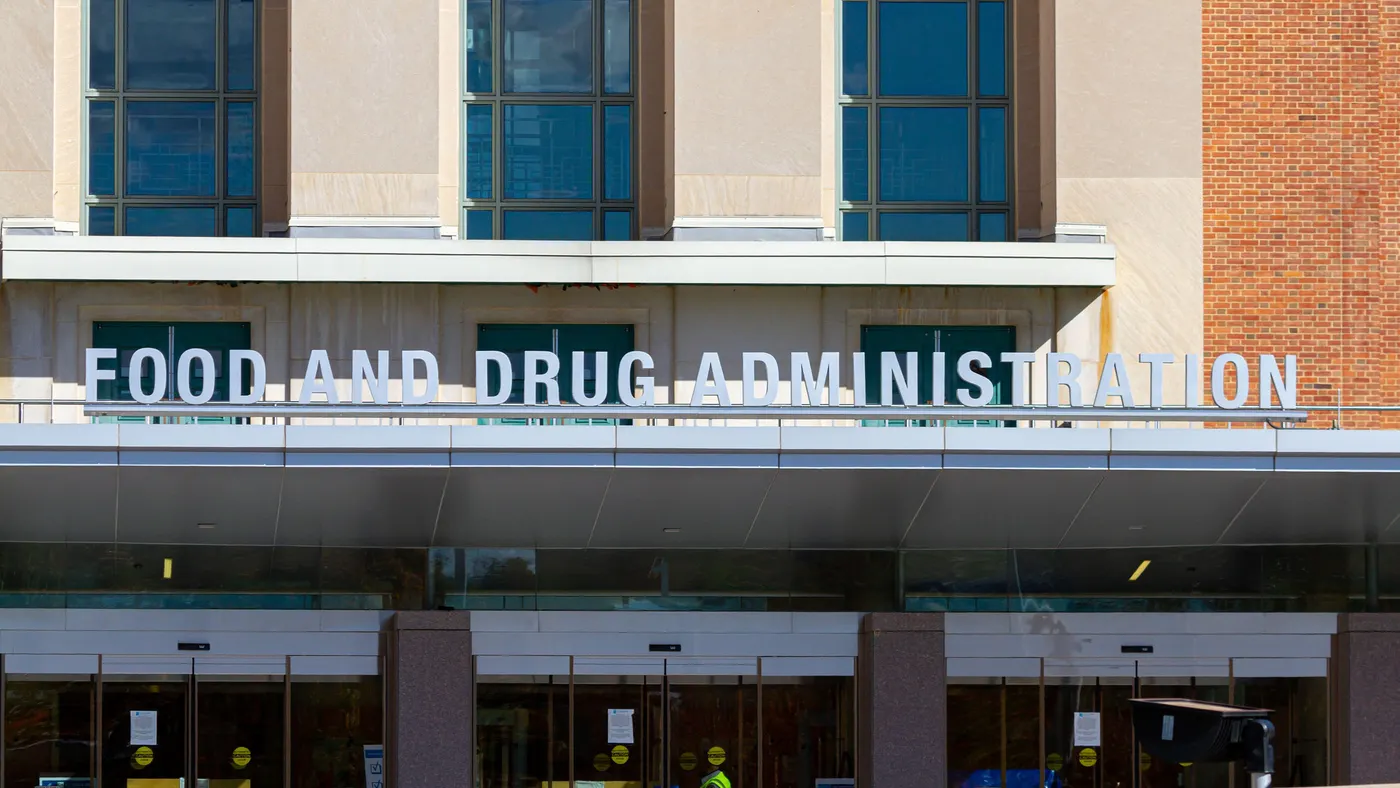
The U.S. Food and Drug Administration headquarters in Silver Spring, Md., on Nov. 10, 2020.
Alamy
Biotechnology executives and investors were hoping the turbulence that consumed the Food and Drug Administration in 2025 might subside this year. Layoffs, leadership changes and surprise shifts in decisionmaking created an air of unpredictability that threatened to slow a broader rebound. Nearly half of the investors polled by analysts at the investment bank RBC Capital Markets called the regulatory climate the sector’s “biggest issue.”
A quarter of the way into 2026, though, the narrative hasn’t changed. The FDA lowered pivotal trial requirements, awarded more special vouchers and spotlighted a new approval framework for rare disease — initiatives designed to showcase regulatory flexibility and speed. Yet the agency was simultaneously embroiled in multiple, unusual spats with drugmakers over controversial rejections and review delays. And it again has another important position to fill, with the looming departure — for the second time — of top FDA deputy Vinay Prasad.
Against that backdrop are several coming verdicts on closely watched medicines for skin cancer, obesity, heart disease and more. BioPharma Dive has laid out five decisions to watch over the next three months, and will add to that list at the start of the third and fourth quarters.
Keep up with the story. Subscribe to the BioPharma Dive free daily newsletter
Replimune claimed to have been blindsided when the FDA rejected its melanoma drug, codenamed RP1, last August.
After all, Replimune’s therapy had succeeded in a trial regulators had once signed off on and that showed that about a third of patients who didn’t respond to cancer immunotherapy appeared to benefit from a regimen involving RP1. Only in its rejection letter did Replimune learn that the study, in the FDA’s eyes, wasn’t “well-controlled” and couldn’t be "adequately interpreted.”
Those issues “were not raised by the agency” beforehand, CEO Sushil Patel said in a statement at the time.
The situation made Replimune part of a trend. Many drugmakers of late have accused the FDA of reversing a previous position in spurning a new medicine. Those incidents have frustrated biotech investors and drawn criticism from newspaper opinion pages as well as lawmakers. Replimune’s case was seen as a prime example; Nearly two dozen investigators from its key study penned an open letter to the FDA afterwards, disputing the agency’s negative findings and pleading for another review.
But Replimune has since rebounded quickly. It met with the FDA in September, and provided the agency with additional information and analyses afterwards. A revised application was accepted in October, setting the stage for a decision that’s expected by April 10.
That verdict is now the latest test of FDA flexibility. Investors appear to be betting on a positive outcome, as Replimune’s stock has seen “positive momentum” in recent months, wrote Jefferies analyst Roger Song. One reason is the pending departure of Prasad, who’s been running the agency office that regulates drugs like RP1 and has taken a harder-line stance on approvals. Another is mounting political pressure on the FDA.
Those factors have led to “growing optimism that FDA leadership may adopt a more permissive stance toward drug approvals” going forward, particularly within the biologics division Prasad’s been leading, wrote Cantor Fitzgerald analyst Li Watsek.
The stakes are high for Replimune. A second rejection would force the company to seek a traditional approval based on confirmatory study data it’s currency accruing. But it’d need a new financing plan to survive until then, given the company’s cash reserves only extend into early 2027, Song wrote. — Ben Fidler
Eli Lilly's orforglipron
for obesity
Note: This entry was updated on March 30, 2026. An approval decision is still pending.
Novo Nordisk fired the first salvo in the next battle for obesity drug supremacy by launching an oral version of its popular Wegovy medication on Jan. 5. But its lead on chief rival Eli Lilly is likely to be short, as a similar, oral GLP-1 drug Lilly calls orforglipron is already under a faster-than-usual FDA review.
An approval decision should come this quarter. Commissioner Martin Makary has granted orforglipron one of the agency’s new national priority vouchers, which drastically shorten review times by spurring the FDA to take an all-hands, interdisciplinary approach for experimental drugs that fit with the Trump administration’s health agenda.
Awarding orforglipron the voucher may have removed a key competitive edge for oral Wegovy, as the first-mover advantage Novo enjoys may be trimmed from months to mere weeks if Makary’s controversial promise of one- to two-month reviews for beneficiaries comes to pass. And though the two drugs appear similarly effective in helping people with obesity lose weight, orforglipron has a couple other benefits that could boost its market share.
One possible edge is that, unlike with oral Wegovy, people who take orforglipron don’t have to fast for 30 minutes afterwards. Another is that as a chemical, or “small-molecule” drug, orforglipron is simpler and cheaper to manufacture than a peptide like Wegovy. And with the price deals cut between the two obesity drug manufacturers and the White House, Novo’s flexibility to negotiate a preferred position on private insurance formularies may be more limited than it has been with other metabolic medications.
Some analysts and investors have been skeptical of the data supporting orforglipron, particularly in obesity, where its weight loss effects haven’t matched injectable GLP-1 drugs. Novo’s Wegovy pill is also off to an exceptionally fast start, while a growing number of other, similar medications are progressing through clinical testing.
Still, orforglipron is widely viewed as a future blockbuster that’ll further cement Lilly’s dominant position treating weight loss. Consensus estimates have the drug generating $1.4 billion in U.S. sales this year alone and topping out at $26 billion annually. RBC Capital Markets analyst Trung Huynh believes those figures to be “conservative.” Huynh forecasted U.S. sales would reach $1.7 billion this year and peak at $36 billion, citing the launch trajectories of Zepbound and the Wegovy pill. — Jonathan Gardner
Arvinas and Pfizer's vepegdestrant
for breast cancer
Arvinas and Pfizer first began working together more than a decade ago on drugs that junk problematic proteins rather than block their activity. Yet while the first prospect to come from that work is now on the precipice of an approval, it’s also stuck in limbo.
An FDA clearance of their drug, vepdegestrant, would represent a scientific achievement. Should it happen by a June 5 deadline, that approval would mark the first ever for a “PROTAC,” a type of “targeted protein degrader” that works differently than existing medications.
Yet that achievement has been overshadowed by the drug’s now-diminished prospects, Arvinas and Pfizer had initially hoped to prove vepdegestrant might be helpful for a broad population in multiple lines of breast cancer care. But the two companies’ hopes were dashed after a late-stage study found that the drug only benefited a subset of patients who had a certain mutation.
Arvinas saw its share value plunge after last year’s Phase 3 readout, which showed risk reductions on tumor progression or death that didn’t set it apart from other types of oral, hormone-degrading drugs for breast cancer, like Eli Lilly's Inluriyo and Menarini’s Orserdu.
The smaller-than-expected market for vepdegestrant didn’t “move the dial” for Pfizer, and left Arvinas with alliance terms that were no longer attractive, Arvinas’ former CEO John Houston said last year. Arvinas and Pfizer have since announced plans to license vepdegestrant out to a third party and split the economics of the resulting deal. A pact is expected by the drug’s approval date, but current CEO Randy Teel said on Arvinas’ most recent earnings call that the companies are “well-situated” if a collaboration fails to materialize.
Investors and analysts remain wary of the situation and its impact on Arvinas’ future. Andrew Berens of Leerink Partners wrote in a February client note that he was “not convinced” vepdegestrant is superior to drugs in its class, while Evercore ISI’s Jonathan Miller described it as an “overhang” on Arvinas’ stock.
Arvinas has already largely pivoted to other drugs in its portfolio. The company is now focusing on a protein degraders for Parkinson’s disease, cancer and spinal bulbar muscular atrophy. — Gwendolyn Wu
Ionis’ Tryngolza
for severe hypertriglyceridemia
Over the past couple of years, Ionis Pharmaceuticals has transformed into a company that sells its own drugs instead of licensing them out. The company could take another step forward by June 30, when the FDA is set to decide whether its drug Tryngolza should be cleared for a common metabolic condition causing severely elevated triglyceride levels.
In late 2024, Tryngolza became Ionis’ first wholly-owned product to reach the market. That approval also made it the first approved treatment in the U.S. for a rare genetic disease known as familial chylomicronemia syndrome, or FCS, in which the body has a difficult time breaking down fats in the bloodstream. Ionis followed that up with a second approval for a different rare disease drug, Dawnzera, the following year.
Those clearances are part of a broader plan for Ionis to break even financially by 2028. But it still has more work to do to get there. Though Tryngolza generated $108 million in net sales in 2025, Ionis still posted a net loss of $381 million.
An approval for Tryngolza in severe hypertriglyceridemia could help significantly, opening up a financial opportunity analysts have estimated to be worth billions of dollars. Last year, the company reported positive results from a pair of late-stage studies. In one trial, monthly doses of Tryngolza dropped triglyceride levels by as much as 73%. In the other, those levels fell by up to 68%. Treatment also significantly reduced the likelihood of pancreatitis, a serious disease complication.
However, Ionis faces a looming competitor in Arrowhead Pharmaceuticals, which gained FDA approval for a rival FCS treatment called Redemplo last November. Arrowhead is also developing Redemplo for severe hypertriglyceridemia, and expects to report results around the middle of 2026, with an approval filing coming shortly afterwards if the data are positive.
Some analysts have suggested that Arrowhead’s drug could be superior based on earlier results in FCS that suggested possible safety and efficacy advantages. But it’s unclear whether that’ll play out in testing, and the drugs haven’t been competing for market share long enough to declare a winner. Demand “remains robust” and there’s been “no disruption” from Redemplo’s arrival, executives told Leerink Partners analysts at a conference in early March.
One important factor in the coming competition could be price. Arrowhead launched Redemplo at a steep discount to Tryngolza in FCS so it could keep the drug’s price the same when cleared in a more common condition like severe hypertriglyceridemia. Until recently, that left Ionis’ planned pricing ahead of the coming decision on Tryngolza as the “largest unanswered question” among investors, wrote William Blair analyst Myles Minter, in a February note to clients.
In late March, Ionis revealed plans to price its therapy in the new indication at an annual list price of $40,000 per patient, undercutting Redemplo’s $60,000 yearly cost and representing a “sweet spot” for the company to “contract aggressively,” wrote Leerink Partners’ Mani Foroohar. — Delilah Alvarado
Axsome’s Auvelity
for Alzheimer’s disease agitation
Axsome Therapeutics should know by April 30 whether its already approved depression medicine Auvelity can also be sold as a treatment for the agitation that often accompanies Alzheimer’s disease.
Auvelity pairs two older medications — dextromethorphan and bupropion — which, respectively, are the active ingredients in well-known brands like Robitussin and Wellbutrin. This combination is meant to, for a prolonged period, inhibit a type of protein that plays a substantial role regulating learning, memory and emotions. By stifling these “NMDA receptors,” drugs like Auvelity can relatively quickly repair and rewire areas of the brain responsible for mood.
The FDA first approved Auvelity in the summer of 2022, for adults with major depressive disorder. Net sales of the drug have continued to ramp since its launch. They totaled $507 million in 2025, an increase of 74% from the prior year. Jefferies analyst Andrew Tsai has predicted annual sales could reach $2 billion to $3 billion at their peak in MDD alone.
And they could go higher still should Auvelity notch additional approvals. Axsome has been testing the drug as a potential therapy for Alzheimer’s agitation as well as smoking cessation. In the former indication, results have been mixed. One late-stage trial failed, while another found the drug to be significantly better than a placebo at delaying the time to a patient’s agitation relapsing.
Axsome has forged ahead nonetheless. In the U.S. alone, it’s estimated that Alzheimer’s affects north of 7 million people, with roughly half displaying aggressive or irritable behavior. Treatments remain limited. So far, Otsuka Pharmaceutical’s Rexulti is the only medicine to get an FDA nod specifically for Alzheimer’s agitation.
Tsai, in a note to clients, wrote that his team is 75% confident the agency will approve this new use for Auvelity. They expect Alzheimer’s agitation to ultimately add $1 billion or more to the drug’s peak yearly sales. Auvelity's prospects in this market “should be favorable,” according to Tsai, given its differentiated mechanism of action, rapid effects and “cleaner safety” compared to Rexulti.
“Auvelity is already widely used in MDD and highly penetrated within [the offices of primary care physician],” which is a sign that these doctors are familiar with the drug and positive about its safety, the analyst wrote. — Jacob Bell
No results found
Try removing filters for best results. Clear filters