Dive Brief:
- Shanghai-based Excalipoint Therapeutics officially launched Wednesday, loaded with $68.7 million in financing and a half-dozen antibody drugs for cancer and autoimmune disease.
- The biotechnology startup aims to prove its therapies and in-house technologies can help broaden the reach of “T cell engagers,” multifaceted antibodies that have become popular among drugmakers and investors. One is in early human testing for malignancies expressing the protein DLL3. A second drug for colorectal, gastric and pancreatic tumors should follow later this year.
- Excalipoint is one of many young companies to recently be built around drugs discovered in Chinese laboratories. These startups are often equipped with therapies already in clinical testing or close to it, enabling them to quickly reach readouts that can boost their value.
Dive Insight:
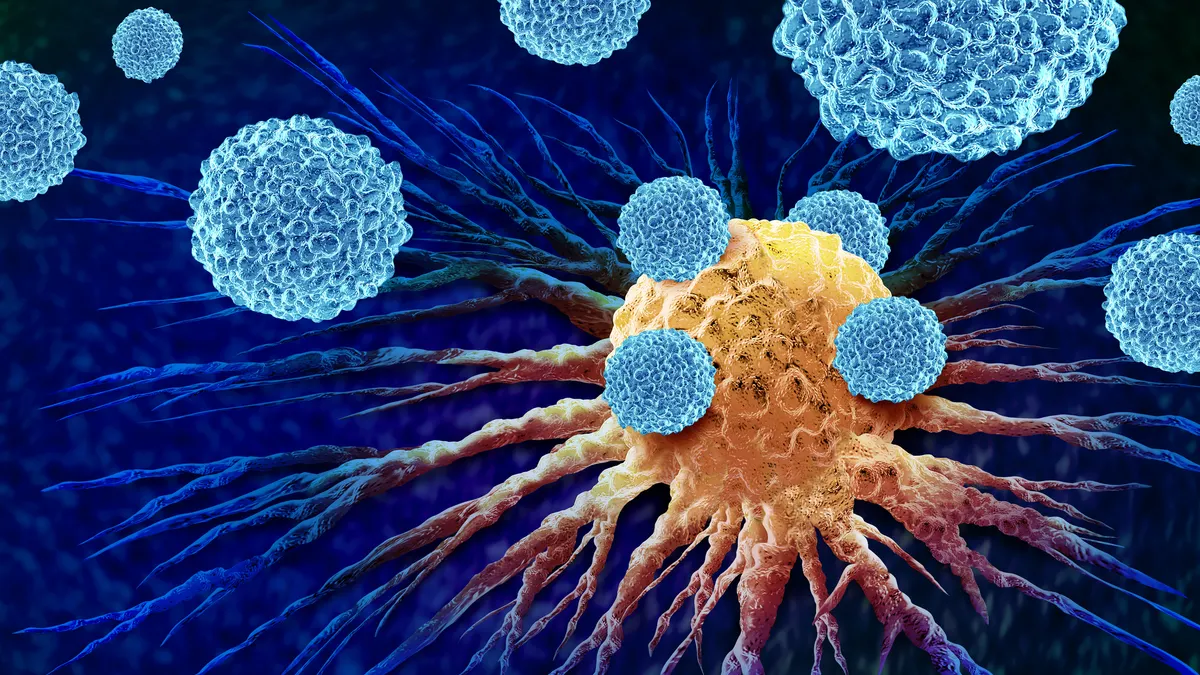
T cell engagers are a form of immunotherapy, binding to targets on T cells and diseased ones to spur an immune attack. Drugmakers also see them as more convenient and accessible alternatives to cell therapies, which are largely administered at specialized centers. An array of companies are advancing T cell engagers for cancer and autoimmune conditions. To date, 10 have been approved by U.S. regulators for various malignancies.
Most of those approvals are for blood cancers, though. Drugmakers have had a tougher time with solid tumors. They’ve also struggled to avoid side effects, like an overactive immune response called cytokine release syndrome, that can force developers to lower dosing. Tumors can become resistant, too, limiting the impact of those treatments.
Excalipoint is developing a portfolio of T cell engagers that it claims can sidestep those issues. One way is by focusing on therapies that have three targets instead of two, an approach the company believes could help the body better recognize the “cold” tumors” that slip past its immune defenses, said CEO Lei Fang. Another involves “masking” technology to help its drugs spare healthy tissue and activate only when near a tumor.
The biotech’s lead program, EXP011, targets the cancer protein DLL3 as well as two immune cell targets. A second “trispecific” antibody, EXP012, aims at those two immune targets as well as CDH17, which is overexpressed in gastrointestinal cancers. Both were licensed for $10 million upfront from Lepu Biopharma, another Chinese drug developer where Fang was previously a vice president.
Deals for multifunctional drugs from China these have been common of late. BioPharma Dive data show that at least 22 have been struck between U.S. or European companies and their China-based counterparts since the start of 2025, among them licensing pacts involving well-funded startups Ouro Medicines and Ollin Biosciences.
“In the future, doing partnership deals with multinational companies or with pharmaceutical companies outside of China, is one important strategy for us,” said Jielun Zhu, Excalipoint’s chief financial officer.
Excalipoint was backed by 11 investors, among them HSG (previously Sequoia Capital’s Chinese division), Lilly Asia Ventures and Eisai’s venture arm. Its financing included a $41 million seed completed last year and a $27.7 million extension financing afterwards. The seed is one of the largest ever for a Chinese biotech startup, Excalipoint said.
The biotech is based in the Roche Accelerator building in Shanghai.