Beam Therapeutics said Wednesday its study of a gene editing treatment for alpha-1 antitrypsin deficiency helped restore protein production in patients with the rare liver and lung disease, the most advanced look yet at a therapy designed to directly correct a mutation-causing gene.
Alpha-1 antitrypsin is a protein that helps protect the liver and lungs. In patients with AATD, the gene that contains the blueprint for AAT has mutated, causing the body to produce misfolded versions. When those proteins accumulate, it can lead to cirrhosis and inflammation.
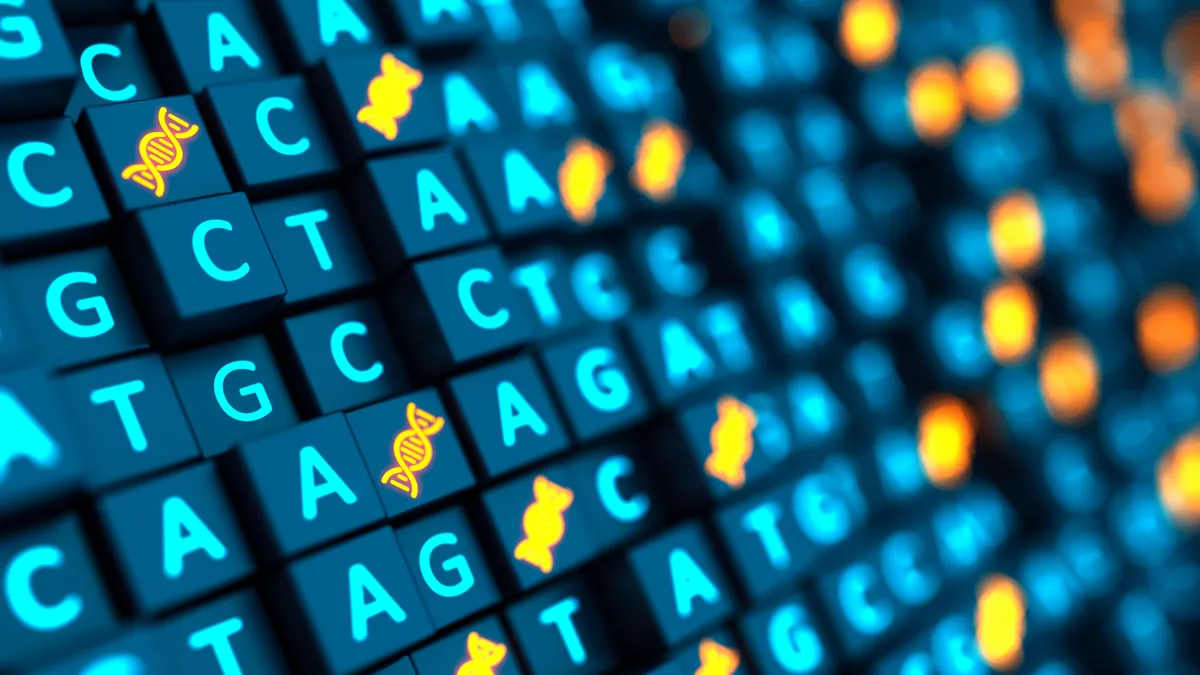
Initial data from Beam’s proof-of-concept trial in 2025 showed promise that its base editing approach could repair damaged DNA. Codenamed BEAM-302, the therapy works by more precisely changing individual nucleotides, or “letters,” in DNA, restoring production of the correctly folded protein.
Data from the ongoing Phase 1/2 trial of BEAM-302 comes from 29 patients who have collectively received three different doses of the treatment. Beam gave two study groups a single dose, and tested two doses in a different group. Patients have been followed anywhere from about one to 12 months, depending on the dose group.
All three groups produced enough of that functional protein to surpass a threshold believed to be protective and safeguard the liver and lungs from inflammation. The treatment also reduced, on average, circulating levels of the misfolded protein by over 80%.
Researchers reported elevated levels of a liver enzyme that could lead to organ damage in two patients, but both were asymptomatic and did not require treatment, according to Beam.
With that data in hand, the company will proceed with the single 60 mg dose and launch an expansion of its trial later this year. It plans to pursue an accelerated approval with the Food and Drug Administration.
“The strength and consistency of this dataset support our selection of 60 mg as the go-forward dose and give us confidence in our ability to rapidly execute this next phase of pivotal development in pursuit of an accelerated approval pathway,” John Evans, Beam’s CEO, said in a statement.
The treatment is the first one that both gives the liver the ability to produce the right type of AAT and reduces the toxic accumulation of mutated proteins, according to Beam.
“This approach has the potential to fundamentally transform how we as clinicians treat AATD and represents a meaningful advance for patients,” said Jeffrey Teckman, a professor of pediatrics at Saint Louis University School of Medicine, in a statement provided by the company.
Beam’s data readout now puts pressure on other companies in a crowded field to prove their drugs can compete, Mani Faroohar, an analyst at Leerink Partners, wrote in a note to clients. Other biotechs working on AATD treatments include Wave Life Sciences and Airna.
Shares in Beam rose about 1% early Wednesday before ticking down slightly in afternoon trading.